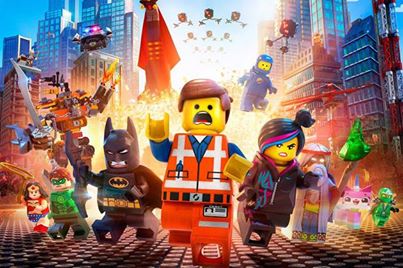
Am I the only one who got hyperventilated and got dizzy watching The Lego Movie? It was like a Pixar movie on a Tilt-a-Whirl on methamphetamine. Which is actually an unfair comparison, because Pixar movies usually have a real heart instead of a fake one implanted at the last moment with that live action message moment. And Pixar’s stories usually unfold rather than being blasted at you like buckshot from a scattershot nuclear neon shotgun on ‘stun.’ The Lego Movie makes Toy Story look like a puppet show power point presentation.
Sure, I get the popularity of the movie. It’s like crack for kids with short attention spans. I don’t think there’s a scene that lasts more than three seconds before another chase with a thousand pieces of visual and aural stimulation bombard you incessantly into submission. I get the feeling the creators’ sensibility and inspiration was formed under ecstasy at a Rave with strobe lights flashing. The filmmakers don’t take any chances or trust that you won’t get restless unless there’s sight gags, random joke comments, recycled plot memes, first person roller coaster gyrations and explosions pummeling you every possible moment.
This film shouldn’t get three stars; it deserves six Red Bulls, because that’s what it was conceived, animated and produced on. I’m not exaggerating when I say I walked out of the theater with physical heart palpitations as if I had drunk the Red Bulls myself. That’s why the film itself is like an Adderall prescription for restless 3-10 years olds. No doubt they are pummeling their parents to take them to their nearest toy store RIGHT NOW to gobble up Lego kits they will take home to try and recreate the visceral thrill of the picture, that is… until they realize again Legos actually don’t animate themselves unless you ARE on drugs.
Okay, I’m a codger, a fuddy dud, an aging boomer. But it’s almost like our entire culture is now the movie Speed, where the bus will explode the moment it de-accelerates below 50 miles per hour.
 But what all these people drinking 5-Hour Energy drinks, Red Bull, Starbucks coffee infusions, Mountain Dew and jacking themselves up on high-intensity shooter games, and Lego movies don’t realize… is that there IS a price to be paid for pushing your adrenaline glands to the max 24/7. You WILL crash and burn out. Eventually. And sooner rather than later. It may be physical when you wipe out your adrenals, or mental when you fry your synapses, but you’re headed for a fall. Maybe we’re all headed for a fall. Think of your brain like Lucy Ricardo on I Love Lucy trying to keep up with the chocolates coming down the conveyor belt, which keeps getting faster and faster until everything is all Fudged Up (no one gets that reference but boomers, but that’s okay).
One sign is to just look around next time you’re out and see people with the jittery legs. You know who I’m talking about. They’re sitting, but their leg is jittering like they are anxious to go somewhere, anywhere. Like the very act of trying to sit still is causing them to hyperventilate, or boil like water cooling the rods of a nuclear reactor.  I see this EVERYWHERE now, and it’s obviously some manifestation of some real or manufactured pent up energy having a hard time being contained. I know people who would physically explode if they ever tried to harness or still their bodies and minds long enough to practice transcendental meditation.
I remember my psychic mother-in-law (yes, I had a licensed psychic mother-in-law) once told me that the human race was vibrating itself out of existence. Naturally, I put this observation into the category of many other wild predictions she made that seemed a bit far-fetched at the time.
Now… I’m not so sure. The idea that we can’t focus on any one task at a time; that we have to be stimulated constantly by multiple inputs at all times… is a pretty clear symptom of this phenomenon. No one can actually attend a concert, sit and just listen anymore. They have to sit, stand, listen, yell, sway, jazz hands, record with their iPhone, tweet to their friends, and save to their Facebook all at the same time. The idea of any experience being purely one thing anymore is passé. It’s not even allowed to be a real experience unless it’s somehow documented, recorded, relayed or re-copied or Instagramed ad infinitum and at the same moment.
Maybe this is the current evolution of the human race; to require so much multiple stimulation at one time to speed up the process of our internal coping mechanism and force that evolutionary leap to processing everything faster like the computers that serve us.
Or maybe we’ll discover sooner than we expect or are prepared for, that, unlike the lifeless microprocessors in our computers, the only thing you get when you speed up the processing of the living tissue, meat and blood we are ultimately made of… is hamburger.
Maybe that’s why zombies are so popular right now in the culture. It’s not because we fear them or the apocalypse; it’s because we envy them. They only have one thing on their minds at any time, all the time: your brains.
If you’re ten years old and you now set The Lego Movie as your necessary level of stimulation, then I will wave to you as you pass me by aging your nervous system at rate 100 times faster than any entertainment I ever grew up with. I may still be living in Mayberry, but you’re next stop in The Twilight Zone is Willoughby. (Google that while you read this, watch YouTube and listen to Imagine Dragons)
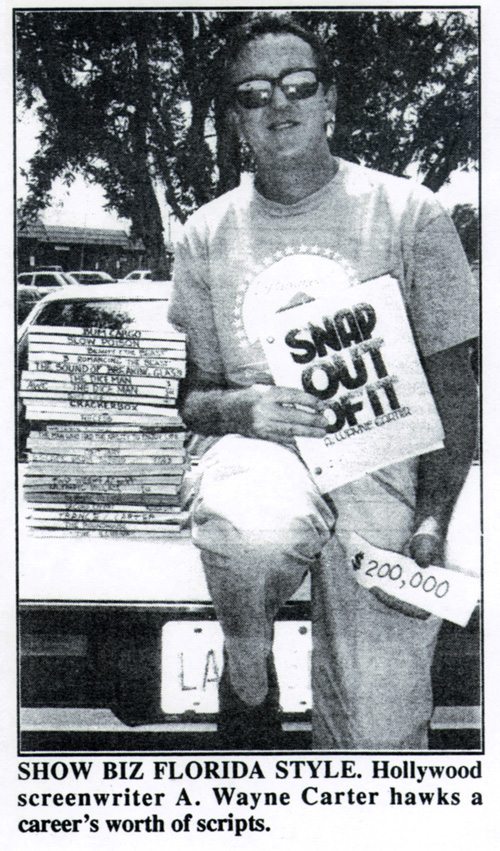
- A. Wayne Carter



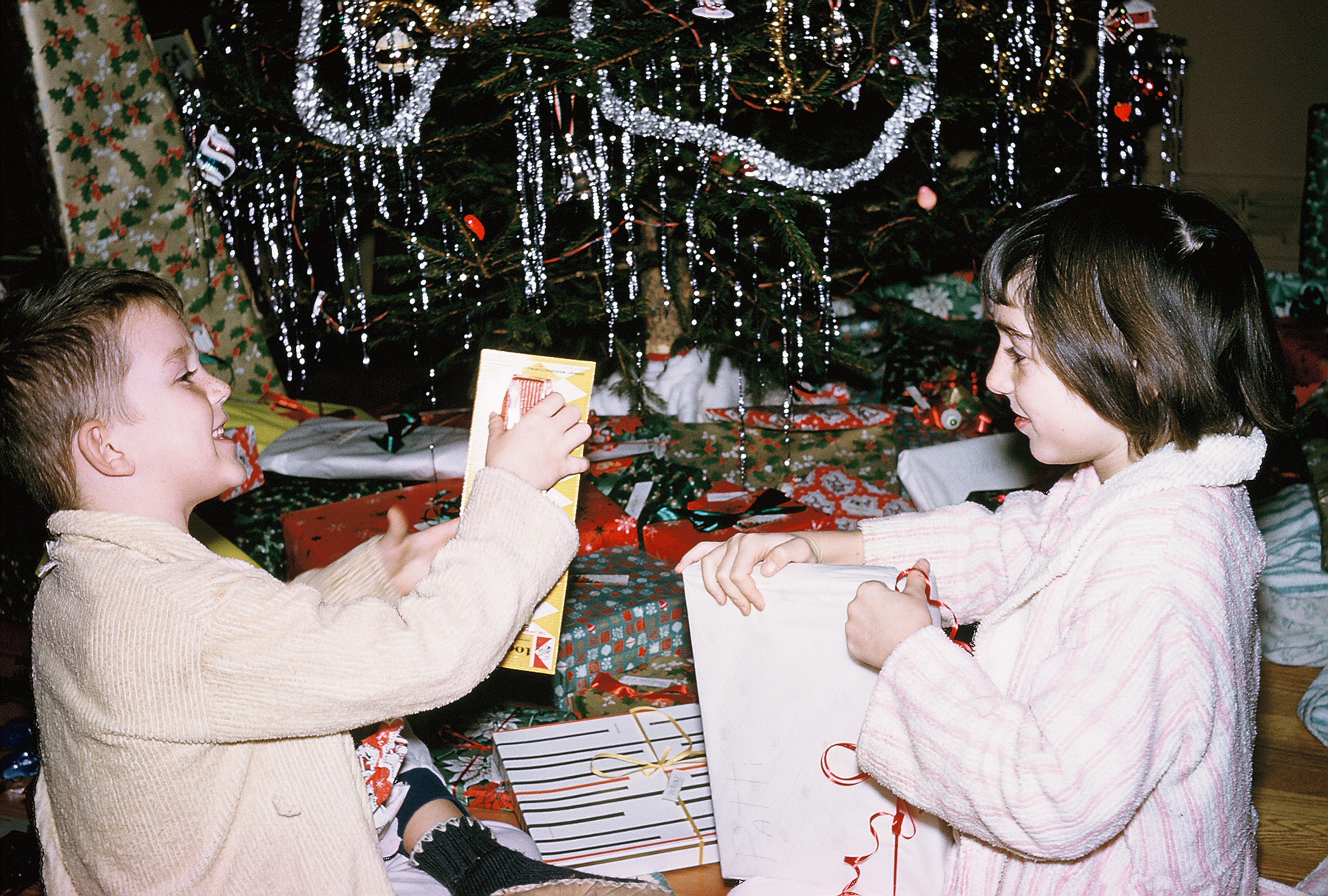
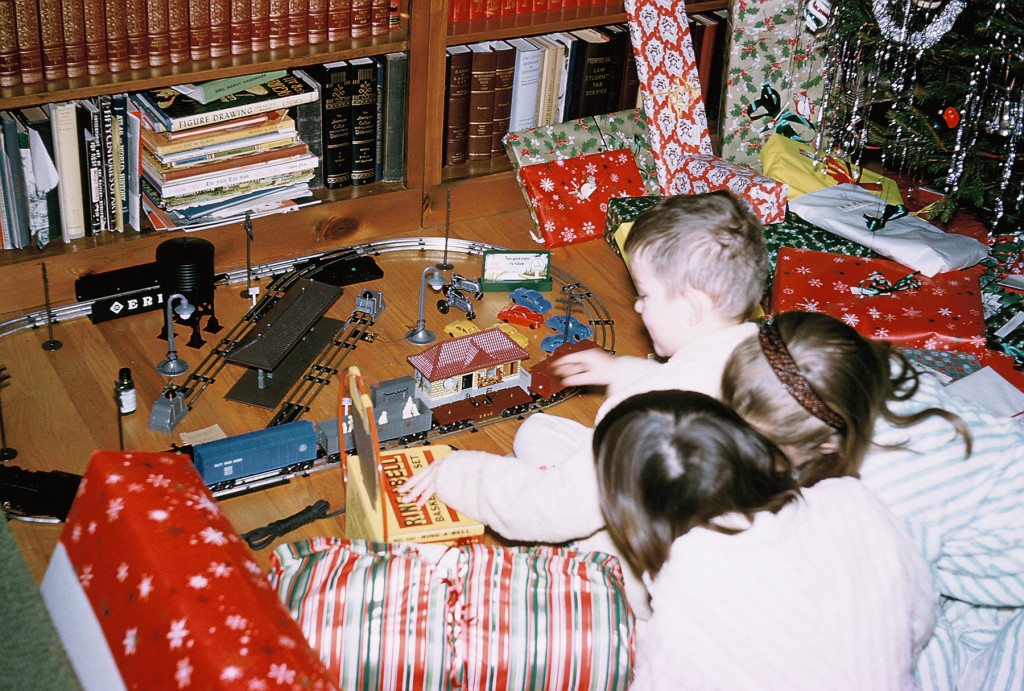 And the son also beams…
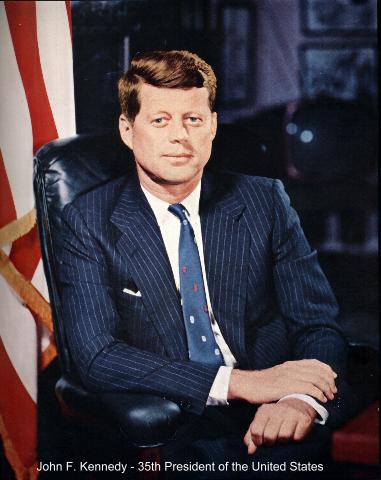
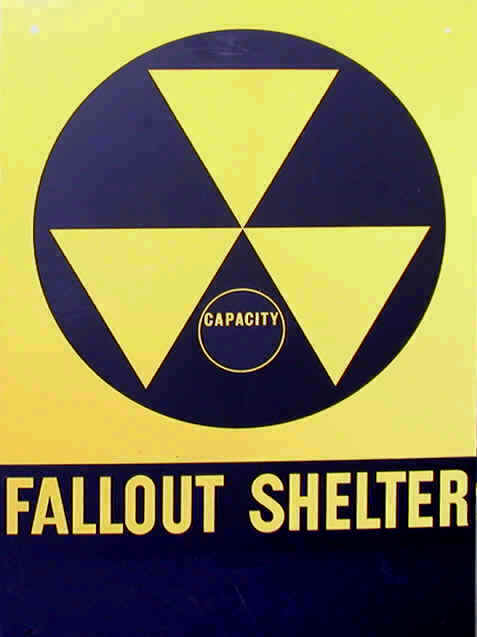 We were told to be silent and I can remember just putting my head down on the desk and trying to grasp what it meant that “Our President” had just been killed. Then they sent us home. I can’t remember if I ran or walked the mile or so home. Because of the Cold War and nearby Washington D.C. being a ground zero target for Soviet ICBMs, we often had Civil Defense drills where we were released from school and told to run home as fast as we could. This was no drill. I can only remember getting home and finding my mom red-eyed and crying on the couch in front of the television in our living room.
 We lived in Maryland about 15 miles from the White House and everyone we knew in our universe liked President Kennedy. He was young and vibrant and optimistic. The Cold War with Russia was tense, but the ‘hot’ wars were over and America was in a boom economy. He promised we’d be on the moon within the decade after the Russians had gotten the jump on us to space with Sputnik, and we believed him. We envisioned the future like the cartoon, “The Jetsons” with our families living in dwellings among the clouds and scooting around on our own private flying saucers. The press labeled the glow of optimism that surrounded Kennedy and fueled our belief in the future as “Camelot” – a magical kingdom on a hill.
  I couldn’t believe it. I spent years later in California going to lectures by Mark Lane and other conspiracy theorists trying to weave some fantastical story that gave such a senseless tragedy the mass complex story line it deserved. But I’ve spent the rest of my life learning to understand that, more often, the simplest explanation is usually right, and today, single lone disturbed gunman cause havoc almost every day. The problem with most mass conspiracy theories is they involve human beings, who are flawed and often susceptible to paranoia; they involve other human agents who are never as brilliant as we attribute their plots to be; and most people (who are not professional spies or soldiers) can’t resist the attention from spilling secrets if they know anything. Human behavior demystifies the myths almost every time. (
 Here’s what I do know is true: John F. Kennedy saved the world. At the most tense moment in the Cold War for thirteen days in October of 1962, when Russian was placing nuclear warheads aimed at the United States in Cuba, Kennedy resisted bullying five-star hawk generals like Curtis Lemay demanding we immediately attack, which would have certainly ignited World War III. Instead, he challenged and stared down the Russian Leader Khrushchev both through public denunciations at the United Nations, and through secret emissaries communicating indirectly, and made a face-saving deal for Khrushchev to back down and withdraw the missiles.
  Strong arm diplomacy instead of knee-jerk reaction won. And for nine year-olds like us who were shown 18 millimeter films in school of how we could somehow protect ourselves from a nuclear bomb by ducking and covering under our desks, the imminent threat of a worldwide exchange of thousands of inter-continental ballistic missiles with nuclear warheads was lifted.
 And we spent the next few days watching Kennedy’s funeral. There were only three television channels back then and they were all tuned into the funeral events nonstop. We saw the flag-covered coffin in the caisson move slowly through the cold streets of Washington. We watched six year-old John Jr. salute at his father’s grave. We watched the widow, usually fashionable with a stylish hat and sunglasses, sheathed in a dismal black with a veil.
 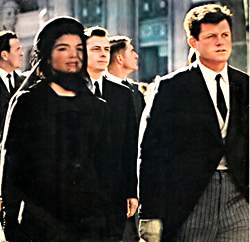 And we experienced the optimistic spirit that so pervaded his presidency being gradually lowered into the ground along with his remains.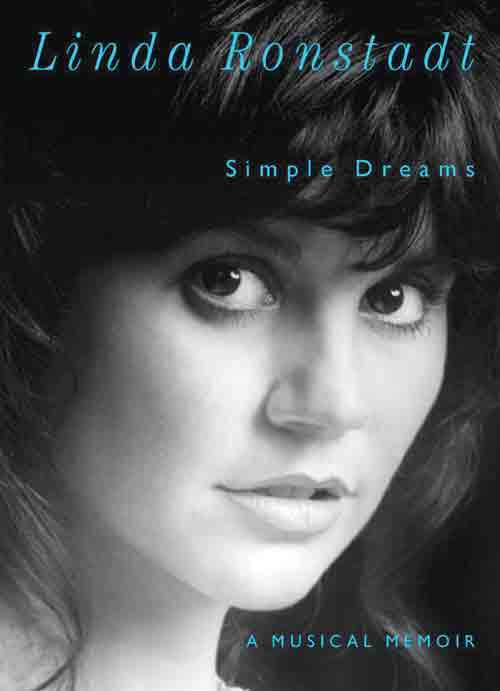
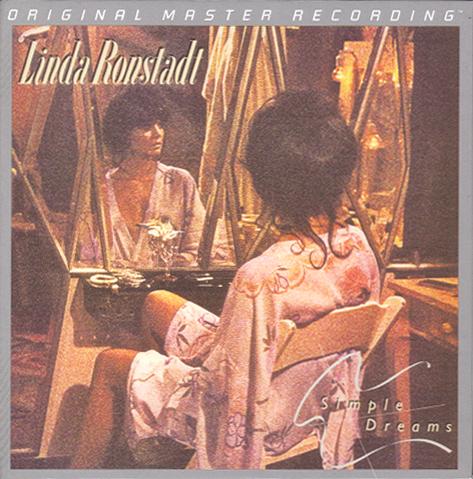 I guess I must have been dreaming if I thought we were going to get a story about sex, drugs and rock n’ roll from my favorite all-time rock goddess. But sadly, you pretty much dismiss your rock n’ roll years in this sweet little memoir that is strictly about your musical evolution from barefoot Tucson mariachi granddaughter, to country, to rock, to standards, to opera, and back to mariachi again.
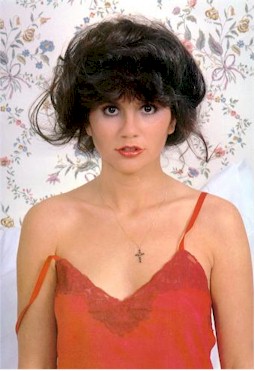 And the rock records – the stuff you’re most known for – gets the short shrift. You practically disown your period in rock because you claim you were naïve about the technicality of your instrument – your voice, and that your singing was terribly flawed through all those classic songs we grew up with; “You’re No Good,” “When Will I Be Loved,” “Poor Poor Pitiful Me,” etc.
 “What’s New,” but then promptly handed them over to my mother. I’m sure you hit every note correctly, but there was a sterile coldness about them precisely because it came off more like some technical stretching exercise rather than genuinely from the gut. Those are the songs of a different generation, who earned the right to own them through different experiences. Even my mother preferred the original singer versions.
 I even bought “Canciones de me Padre,” your first mariachi collection. And Si, you can yelp with the best of them. But again, even though you have Spanish heritage roots, it’s obvious this was not your natural first language and you were also attempting a physical stunt by trying to recreate these classic mariachi songs. But, again the stories they told didn’t come from your gut. Those songs weren’t written by someone with experiences such as yours.
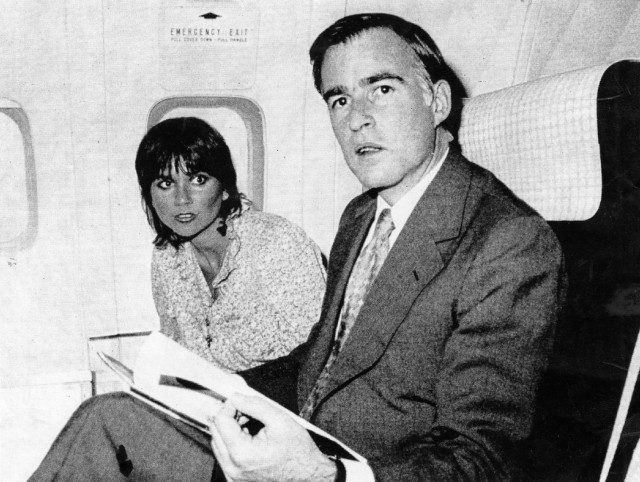 I remember walking by and seeing you having dinner with Jerry Brown at Barney’s Beanery in West Hollywood one night back in the 80s. What I would’ve given to eavesdrop on that conversation, or to even ask you for an autograph at the time, but I was far too respectful of your privacy.
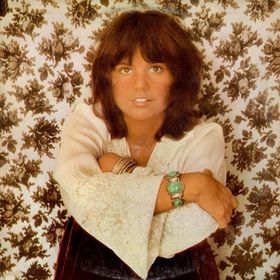 People read books to find a point of intersection to relate to either enrich or inform their own lives or interests, but who of us can relate to having so singularly powerful or beautiful an instrument as your voice? We KNOW that part. What can you tell us that you learned personally from your loves, triumphs and losses? I realize this isn’t People magazine, but it doesn’t have to be gossip. Just human.
 Personally, I think you should write a book about coping with this disease and, hopefully, how you find more strength and other passions to move forward. Baby boomers everywhere are going through similar types of experience, having life challenges and chronic conditions that force us to adapt how we live, love and move on. Your journey can inspire you forward and also help the rest of us. Whether you own it or not, the mantle of being an icon to so many of us fans requires some stewardship.
 Ironically, or perhaps cynically because of the disclosure of your condition, you have finally been nominated for the Rock and Roll Hall of Fame this very year. I’ve ranted that you should have been in there ages ago. But after reading you so disclaim your own rock heritage in this book, I now understand the Hall might be reluctant. No matter. I think you get in, and I look forward to seeing you accept the award at the ceremony, and also to some of the other powerful women vocalists of our time (Trisha Yearwood?) try to recreate some of your hits. They might do well, but, just as when you tackled the standards with Nelson Riddle, it won’t be the same.
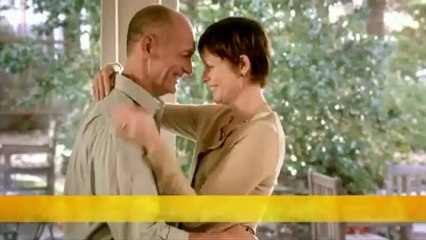
 The thing I find most amusing is thinking about the casting and the shooting. I’ve scripted and produced dozens of corporate videos and commercials of happy couples checking in at hotels, eating at restaurants, children bouncing on the hotel beds, etc. I know the drill. And for some reason, you never cast the actual spouses together in a video or commercial, even if both are working actors. It just rarely happens.
 But the real husband is either off camera or will be seeing the commercial a hundred or more times, if he ever watches the news.
 Whenever I hear someone say they can’t watch a black & white movie or television show, I cringe … with pity. No student, lover or fan of cinema ignores the 50 plus years of artistry and lighting evolution that went into perfecting the black & white image on film … before color became the common palette. And all that brilliant contrast of light and dark went the way of that gold dust blowing away into the wind at the end of Treasure of the Sierra Madre.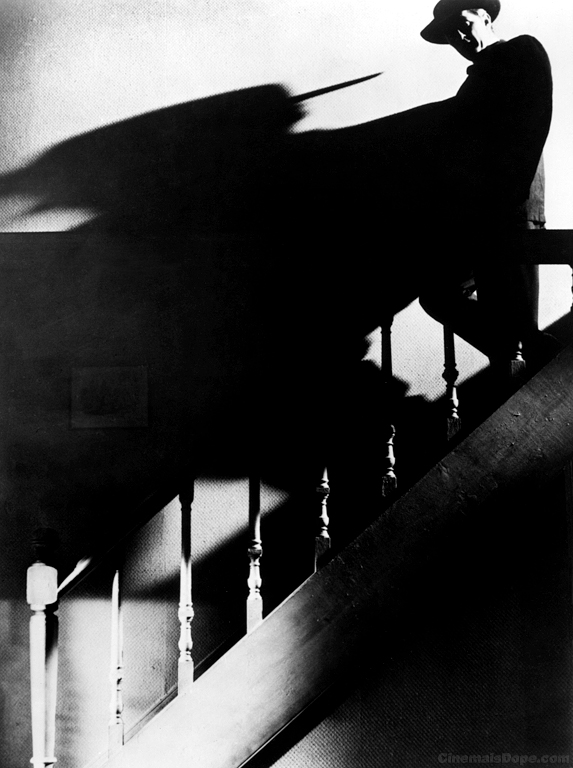

 I went straight to my DVD box collection of the original series and put the episode on to show “The Zanti Misfits” in action. My son took one look at the rather primitive animation of the ants crawling out of their cheap, tin-looking aircraft and immediately scoffed in ridicule, “That’s not scary.”
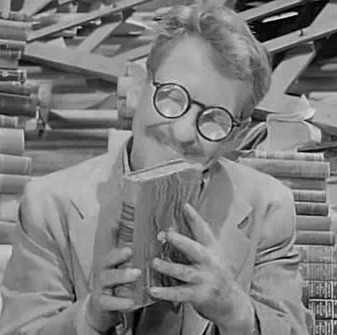
 He watched this ‘Jelly Man’ picking up lake scum with its claws and stuffing it in what appeared to be a slit-like mouth. He watched the Jelly Man running through a forest back to a laboratory. He watched the Jelly Man use its claws to attack and kill one of the workers in the laboratory where the creature had first been transported to Earth. And he watched as they eventually captured and sent it back to the planet it came from in the same transporter. And that was it. No major reactions from my son. But somehow he couldn’t take his eyes off of the Jelly Man until he had seen its final moment on screen.

.jpg) So what’s the trend that’s got my wrinkles rankled? It’s overly tight suits with overly short tight pants. And where are we seeing it? Such fashion mavens as Nick Cannon on America’s Got Talent, and Bill Maher on HBO’s Real Time. Are they really fashion mavens? They seem to think so. And what exactly is a maven? A raven with a hair lip?
So what’s the trend that’s got my wrinkles rankled? It’s overly tight suits with overly short tight pants. And where are we seeing it? Such fashion mavens as Nick Cannon on America’s Got Talent, and Bill Maher on HBO’s Real Time. Are they really fashion mavens? They seem to think so. And what exactly is a maven? A raven with a hair lip? We look for any excuse not to face the blank page of oblivion, so a tight collar, scratchy underwear, overly warm sock, and any presence of finger rings or neck jewelry is just going to interfere with the process. Shit, I bet I could feel a year-old tattoo on my skin. Sensitivity is our gig and it’s also our bane. To create characters and invest them with life, we literally, or at least figuratively, have to walk in their shoes.
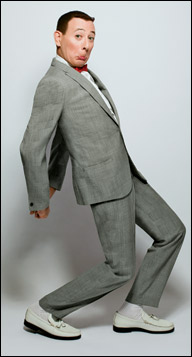 So when I see a Nick Cannon or a Bill Maher walking around in an overly tight suit, colored noose, and clearly uncomfortable tight shoes with scary high lifts, I feel their pain. And I wish they could feel the pain I feel for them.
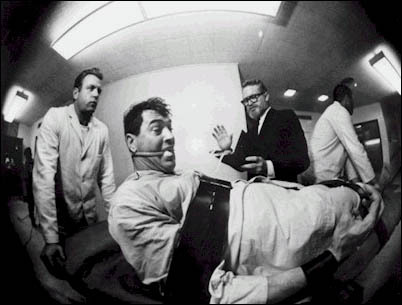
 But first, the plot. A bored, middle-aged Wall Street banker, Arthur Hamilton (John Randolph), is slipped a business address on a piece of paper before boarding a commuter train at Penn Station for his Scarsdale home. His job is numbingly dull, his marriage is devoid of any passion, his daughter is gone off on her own life, and his life is… lifeless. A call from someone claiming to be a close friend from the past eggs him on to go to the address, but how does this complete stranger’s voice know so much about him?
 And, just to make sure you keep your mouth shut about a business that requires secrecy (and as a surefire deal closer) they drug you and shoot staged blackmail footage of you in a compromising or criminal situation.
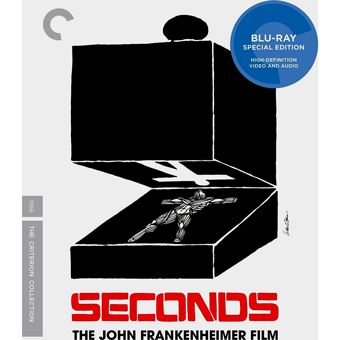 But, of course, no one changed your brain or your mind or the way you think, and you are haunted by your former life, and these new ‘friends’ seem just as phony as you are, and when you get overly drunk at a party and start blabbing information about your former life, those new ‘friends’ are not so friendly because your loose tongue is jeopardizing all of their ‘second’ chances.
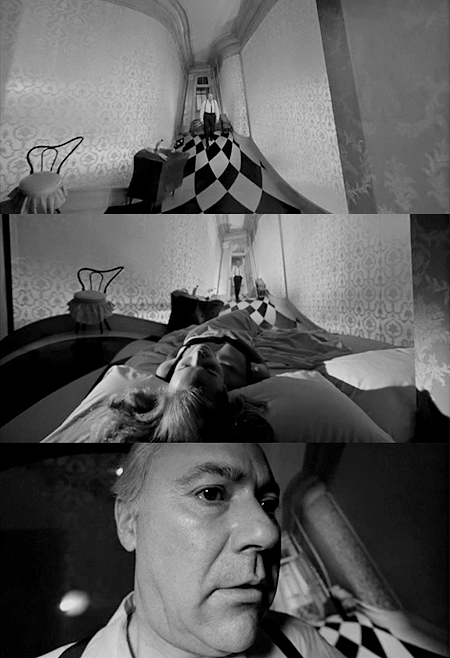 It’s a shockingly powerful and apocryphal tale that completely subverts what so many people bored with their lives think would happen if they had a second chance. The black & white photography, framing and camerawork by Oscar winner James Wong Howe are bizarrely unnerving, and the ending is as disturbing as anything you will ever see in film.
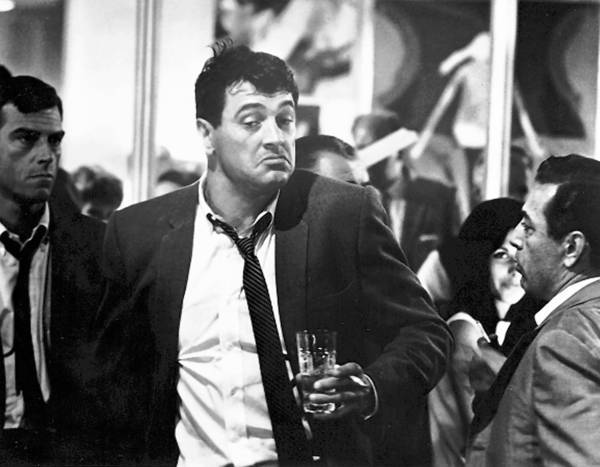 Maybe it’s the ultimate ‘grass is always greener’ story, that is revealed as an inevitable nightmare.
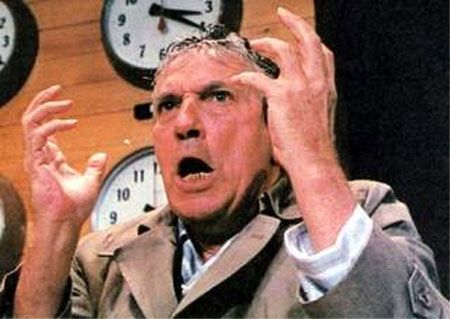 It’s the typically amateurish and overly philosophical tale every first-time screenwriter tries (and as a professor of screenwriting, I read hundreds of them). The speech was almost entirely the thrust of Howard Beale’s “Mad as hell and not going to take it anymore” rant from Paddy Chayefsky’s classic “Network,” though not nearly as beautifully written. It was written a couple years before “Network,” though, and it was inspired by the frustrating horror of “Seconds.”