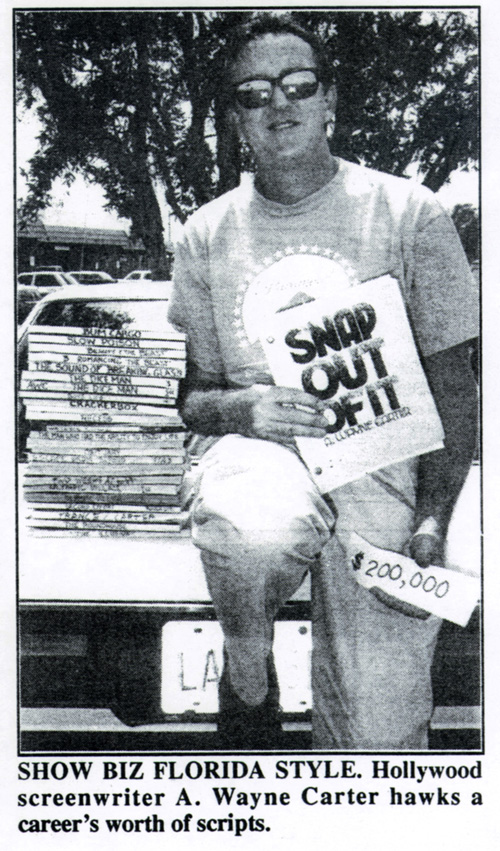
No one pursues a career in journalism to get rich. It’s one of the most underpaid and insecure professions available. When I worked as a journalist in the 90s for a chain of regional Florida newspapers my salary was $7 per hour (this after some years making $100k+ in Hollywood as a screenwriter). It was unsustainable to get ahead or start a family. Yet I loved every minute of it. I interviewed the mayor, police chief, artists and scientists, museum curators, covered the police blotter, city council meetings, did police ride-alongs, went on an alligator hunt, hosted a weekly cable news program, flew in a bi-plane, snorkeled for five-million-year-old shark teeth, and took a ‘ghost tour’ of the city of Fort Myers. It was thrilling because I was on top of everything newsworthy happening on my beat. You become addicted to researching and knowing precisely what’s going on. And pursuing the truth. That’s essentially the draw of the profession: what’s really going on?’
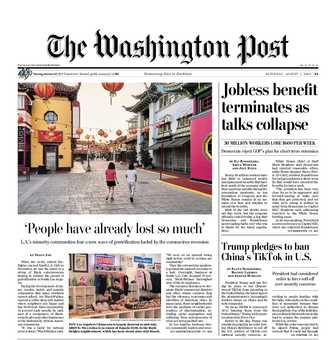
You will not find a better source for the truth than a newspaper. Investigative journalism requires multiple sources to confirm a story or the facts before going to print. If the reporter gets one fact wrong or over-exaggerates one element of the story, they lose their job and their credibility. It’s that simple. Broadcast journalists usually face the same standards. NBC anchorman and journalist Brian Williams lost his job because he exaggerated the story that a helicopter he was flying in over Afghanistan was fired upon from the ground multiple times. Legendary CBS anchorman and journalist Dan Rather lost his job because he went ahead with document evidence that former Presidential candidate George W. Bush was AWOL an entire year while serving in the National Guard before that evidence was fully vetted – even though the story later proved to be true. And yet it has been clearly documented and recorded by The Washington Post that President Trump has lied to the American public more than 20,000 times since his inauguration… and he suffers no consequences.
I cringe every time he accuses the legitimate press of being ‘fake news’ or ‘the enemy of the people’ when the reality is the opposite. It is the job of a journalist to hold people in positions of power to account for their actions or statements; to question authority. President Nixon was forced to resign after an extensive investigation by journalists for The Washington Post uncovered various crimes (Google it) for which he claimed were not crimes because ‘the President did them.’ He thought he was above the law. He wasn’t.
My father was the County Attorney for Montgomery County, Maryland when I was a child. This was a position of great prestige and solemn responsibility to the law. And as long as we lived near Washington, D.C. he read The Washington Post every day of his life as if it were the Bible. Because his first professional love was journalism. He was the editor of the Louisiana State University weekly newspaper The Reveille while attending college. After serving in World War II and Korea he had a family of a wife and three children to support, so he used the G.I. Bill to go to night school and become a lawyer to earn enough to support us. He used to tell me, and often, that you can’t always get the job you love, but you can learn to love the job you have. I have often taken this advice to heart in my own pursuits, while taking survival jobs in my preferred occupation as screenwriter. But I always knew he was talking about his own first love that he left behind; journalism, and the idealism and pride that goes with doing it well.
Journalists are not in it for the buck or even for the glory. Very few reporters ever get a story that justifies a possible bestseller, or even more rarely results in a Pulitzer Prize. You do it because you have an insatiable need to know the truth, and through extensive research or interviews you can uncover and reveal that truth to your readers, and have thereby made the world a better place. It sounds corny, but there’s no other way to explain it. That’s the basic thrill of this difficult and inglorious profession. And this revelation is not necessarily something negative. That truth from a subject’s own mouth may be valuable to someone reading to make their own life or situation more positive. Or it may reveal the often-hidden agenda of a subject opposite to what they are trying to project. The goal is not the ‘gotcha,’ but the ‘I get it;’ where some action or event makes greater sense to pass along to the reader for them to make their own decisions based upon the facts. If you give them the facts and straight-forward, legitimate quotes, those decisions or conclusions will be soundly-based. There’s nothing fake about it. No matter how many times he says it, Trump cannot undermine this intention in the minds of those who hunger for and can fully acknowledge the truth. It only reflects back on his own need to obfuscate or distract from something he doesn’t want you to know about his own actions, incompetence, or lack of human empathy.
The next time you see a journalist or reporter challenge or question one of the President’s statements, remember what they came to this profession for and what they consider their calling. In most instances they are just doing their job the best way they know how, and despite the pushback, questioning, or challenges to their own motivations. They ultimately have nothing to gain BUT the truth. And for most of us, that is reward enough.
If you want to get as closely to the facts and the truth as possible, turn off the cable TV noise, avoid social media propaganda and read a local city newspaper (online is just fine). Or The Washington Post. Or The New York Times. This isn’t an opinion.







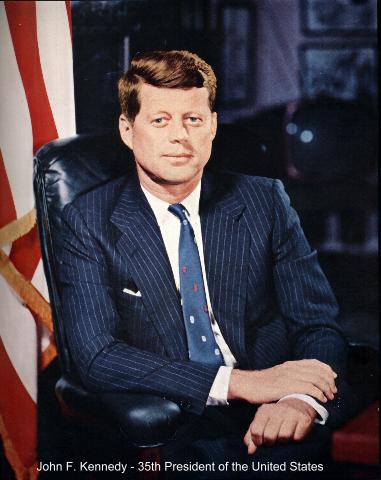
 We lived in Maryland about 15 miles from the White House and everyone we knew in our universe liked President Kennedy. He was young and vibrant and optimistic. The Cold War with Russia was tense, but the ‘hot’ wars were over and America was in a boom economy. He promised we’d be on the moon within the decade after the Russians had gotten the jump on us to space with Sputnik, and we believed him. We envisioned the future like the cartoon, “The Jetsons” with our families living in dwellings among the clouds and scooting around on our own private flying saucers. The press labeled the glow of optimism that surrounded Kennedy and fueled our belief in the future as “Camelot” – a magical kingdom on a hill.
  I couldn’t believe it. I spent years later in California going to lectures by Mark Lane and other conspiracy theorists trying to weave some fantastical story that gave such a senseless tragedy the mass complex story line it deserved. But I’ve spent the rest of my life learning to understand that, more often, the simplest explanation is usually right, and today, single lone disturbed gunman cause havoc almost every day. The problem with most mass conspiracy theories is they involve human beings, who are flawed and often susceptible to paranoia; they involve other human agents who are never as brilliant as we attribute their plots to be; and most people (who are not professional spies or soldiers) can’t resist the attention from spilling secrets if they know anything. Human behavior demystifies the myths almost every time. (
 Here’s what I do know is true: John F. Kennedy saved the world. At the most tense moment in the Cold War for thirteen days in October of 1962, when Russian was placing nuclear warheads aimed at the United States in Cuba, Kennedy resisted bullying five-star hawk generals like Curtis Lemay demanding we immediately attack, which would have certainly ignited World War III. Instead, he challenged and stared down the Russian Leader Khrushchev both through public denunciations at the United Nations, and through secret emissaries communicating indirectly, and made a face-saving deal for Khrushchev to back down and withdraw the missiles. Strong arm diplomacy instead of knee-jerk reaction won. And for nine year-olds like us who were shown 18 millimeter films in school of how we could somehow protect ourselves from a nuclear bomb by ducking and covering under our desks, the imminent threat of a worldwide exchange of thousands of inter-continental ballistic missiles with nuclear warheads was lifted.
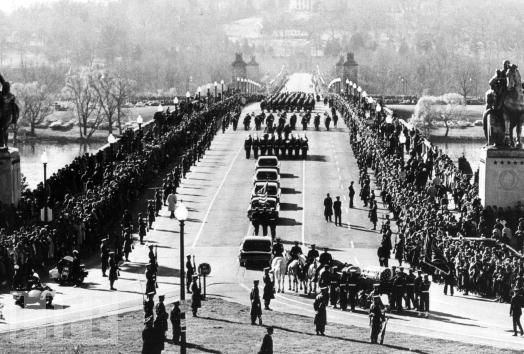 And we spent the next few days watching Kennedy’s funeral. There were only three television channels back then and they were all tuned into the funeral events nonstop. We saw the flag-covered coffin in the caisson move slowly through the cold streets of Washington. We watched six year-old John Jr. salute at his father’s grave. We watched the widow, usually fashionable with a stylish hat and sunglasses, sheathed in a dismal black with a veil.
 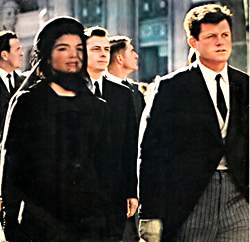 And we experienced the optimistic spirit that so pervaded his presidency being gradually lowered into the ground along with his remains.
 Whenever I hear someone say they can’t watch a black & white movie or television show, I cringe … with pity. No student, lover or fan of cinema ignores the 50 plus years of artistry and lighting evolution that went into perfecting the black & white image on film … before color became the common palette. And all that brilliant contrast of light and dark went the way of that gold dust blowing away into the wind at the end of Treasure of the Sierra Madre.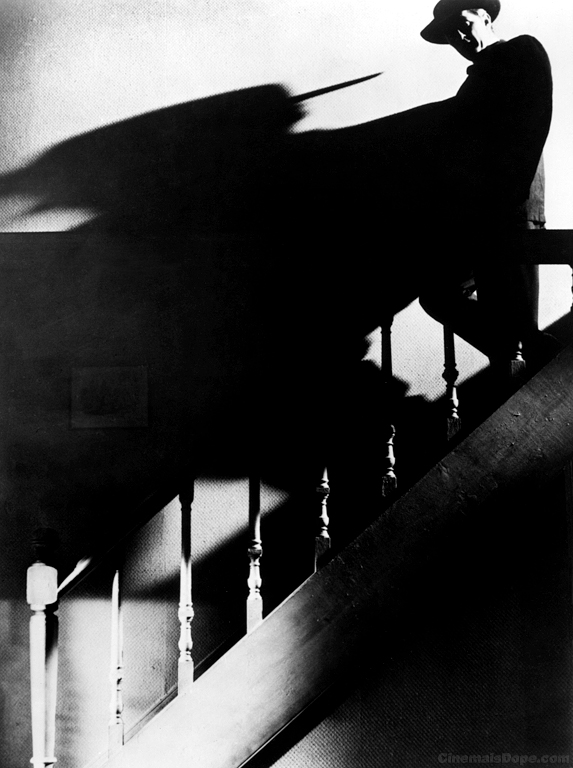

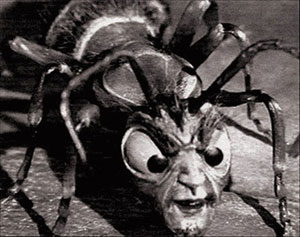 I went straight to my DVD box collection of the original series and put the episode on to show “The Zanti Misfits” in action. My son took one look at the rather primitive animation of the ants crawling out of their cheap, tin-looking aircraft and immediately scoffed in ridicule, “That’s not scary.”
 He watched this ‘Jelly Man’ picking up lake scum with its claws and stuffing it in what appeared to be a slit-like mouth. He watched the Jelly Man running through a forest back to a laboratory. He watched the Jelly Man use its claws to attack and kill one of the workers in the laboratory where the creature had first been transported to Earth. And he watched as they eventually captured and sent it back to the planet it came from in the same transporter. And that was it. No major reactions from my son. But somehow he couldn’t take his eyes off of the Jelly Man until he had seen its final moment on screen.

.jpg) So what’s the trend that’s got my wrinkles rankled? It’s overly tight suits with overly short tight pants. And where are we seeing it? Such fashion mavens as Nick Cannon on America’s Got Talent, and Bill Maher on HBO’s Real Time. Are they really fashion mavens? They seem to think so. And what exactly is a maven? A raven with a hair lip?
So what’s the trend that’s got my wrinkles rankled? It’s overly tight suits with overly short tight pants. And where are we seeing it? Such fashion mavens as Nick Cannon on America’s Got Talent, and Bill Maher on HBO’s Real Time. Are they really fashion mavens? They seem to think so. And what exactly is a maven? A raven with a hair lip? We look for any excuse not to face the blank page of oblivion, so a tight collar, scratchy underwear, overly warm sock, and any presence of finger rings or neck jewelry is just going to interfere with the process. Shit, I bet I could feel a year-old tattoo on my skin. Sensitivity is our gig and it’s also our bane. To create characters and invest them with life, we literally, or at least figuratively, have to walk in their shoes.
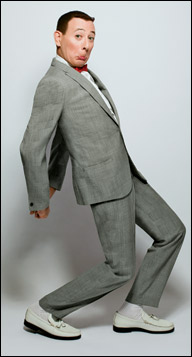 So when I see a Nick Cannon or a Bill Maher walking around in an overly tight suit, colored noose, and clearly uncomfortable tight shoes with scary high lifts, I feel their pain. And I wish they could feel the pain I feel for them.
 I don’t really consider myself a procrastinator, at least not for work. Early on during my school years I learned that the sooner you got your work done, the sooner you can play, while all the other kids were waiting until the last minute stressing over their projects. I carried that attitude, for the most part, into my adult working life. But, as the basic dynamics of parenthood would have it, my 16 year-old son is one of those who puts homework assignments and projects and trumpet practice off until the last possible moment before getting around to it. It drives me nuts. But that’s the point, since being a teenager is all about establishing your own identity and driving your parents nuts. And, the process doesn’t seem to stress him out at all. He knows he’ll get to it, and that’s all he needs. You can’t force your will upon a teenager without it biting you back, so if he doesn’t see it as a problem, I will learn to accept that it’s not a problem.
 The surprise to me was finding out the technique advocated in the book was Meridian Tapping. I had experienced this form of therapy before during grief counseling after my mother died, but here it was tapping me in the face again in a book on procrastination. Meridian Tapping, for the uninitiated, works on the flow of vital energy, or as the Chinese term it, ‘chi,’ through your body and how to keep it from getting blocked or stagnating. Anyone who practices or believes in yoga, meditation, acupuncture or acupressure should be familiar with the concept. Tapping is a gentle form of acupressure for various meridian points on your face, torso, or head that seek to open up or keep open the flow of that energy while you are also ‘meditating’ or focusing on a desired goal or thought. You are stating the problem and also the emotional state you wish to be in to overcome that problem while you do the tapping. I’ve seen the value of this with the practice of “I Ching,” where you toss coins while focusing on an issue in your life that you want resolution for, and then read a proverb relating to that alignment of coins.
  These techniques are really just forms of forcing you to intensely focus on what you want to resolve, and to apply your own consciousness through these conflict-resolving meditative techniques to bring you a solution. It’s not as far out mystical eastern hooey phooey as you might imagine. And the surest way to test whether something’s whack or not is to at least give it a try.