(Summer reruns while I work on a script. Here’s a favorite. Don’t forget to check the archive)
I live less than 50 miles from Cape Canaveral, formerly Cape Kennedy, and formerly Cape Canaveral before that. Talk about an identity crisis.
And now it’s going through another one: What’s the mission?
This week there’s a scheduled launch of an unmanned Ares rocket, which could replace the Shuttle, now on its last scheduled flights in … well, forever. NASA has submitted several mission proposals and budgets to the government, but the government’s got its own budget problems. How can we send a spaceship to Mars when we can’t get our own Earthship in order? Why should we go back to the moon when we’ve already been there? And are we content to just send astronauts up like janitors to regularly empty the Porta Potty on the Space Station?
I find these choices and questions somewhat sad.
Fifty years ago, in 1960, I was playing with my Cape Canaveral toy set as an excitable young boy growing up in Maryland and dreaming about our great big space adventures to come. Our rival superpower, the Russians, had beaten us to space with Sputnick, and now President Kennedy was promising we would beat them to the moon within 10 years.
And, by golly, we did. In the most amazing run of technological breakthroughs, NASA team dedication, personal sacrifice, and fast track government and popular support this world has ever witnessed, we went from stranded on Earth in 1960, to stepping on the moon in 1969.
But we dreamed much bigger than that.
 Our favorite prime time television cartoon at the time was The Jetsons, where a family like ours lived in a penthouse perched in the sky and traveled around in their own personal flying saucers. They also had a cool robot pet dog that fetched the newspaper. (Paper newspapers? In the future? Now that’s science fiction).
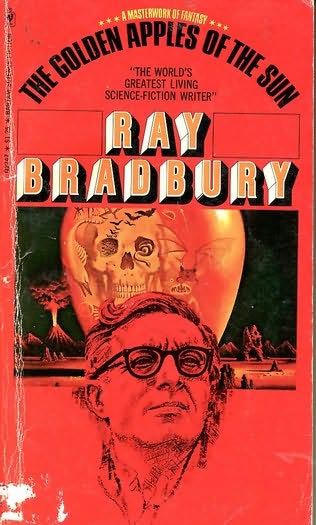
Our favorite books were science fiction treats like The Martian Chronicles and R is for Rocket by Ray Bradbury, who wrote of international space travel, aliens and other worlds as if they were already here, and a natural part of our daily life experience.
We went to the movies and watched 2001: A Space Odyssey, which evo-leaped us in the single tossing of a bone from raging primates to commercial passengers on celestial spaceships waltzing through the galaxy to “The Blue Danube.”
 David Bowie sang about Ground Control to Major Tom in Space Oddity, and Elton John picked up on Ray Bradbury’s working stiff astronaut theme by singing as a Rocket Man, who punched a clock and did his job five days a week, but also had time to ponder why he was, “burning out my fuse up here alone.”
Star Trek, Space 1999, and Star Wars delivered us warp speed to a time where we had so distantly moved on to exploring (and fighting with) other worlds that living on Earth wasn’t even an afterthought anymore.
And beyond going to the moon … none of these things happened.
And none of them likely ever will. At least the way we’re headed now.
It was all just a fever dream fueled by huge leaps in rocket technology, hope, and great expectations.
My childhood imagination soared on those expectations.
And now, as an adult, I don’t even want us to spend one more dime to go anywhere else in the universe. I just want us to get Earth … right. I don’t want us to burn one more drop of ultra high octane rocket fuel further depleting the ozone layer and exposing the Earth to deadlier levels of radiation. I don’t want us to send one more man or woman into space unless it’s for some reason to really help us back here on Planet Earth, today. It’s not enough to live on the fantasy of what travel through the universe can deliver us anymore. We’ve got to deliver here, first.
This isn’t some tree-hugging idealist writing.
This is … merely a realist.
A realist who doesn’t think we need to completely abandon our dream of space, but just abandon the last century’s model and method of how we get there.
The next leap in evolution could be some matter-anti-matter dylithium crystal device breakthrough that beams us throughout the universe without burning fossil fuel or using any more precious resources, but it won’t be constructed from any blueprints left behind from the existing technology paradigm. It will be another great leap of imagination that re-invents the way we meet the stars.
You see, I’m still hopeful that we will explore the space beyond, and maybe even live there one day. But the realist in me now understands we must find the way way out by better exploring the space within. That’s where we’ll find even greater answers to the questions of what’s out there. That’s where the bigger mysteries wait to spark our inspiration and be revealed. And that’s where the next phase of space exploration can begin.
Maybe Cape Canaveral will still be the harbor for this new evolution and rename itself Cape Higher-Consciousness.
I can’t wait for that play set.
— A. Wayne Carter

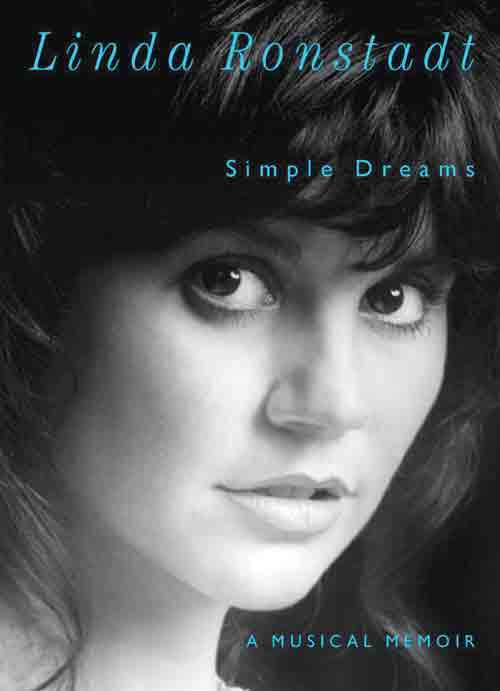
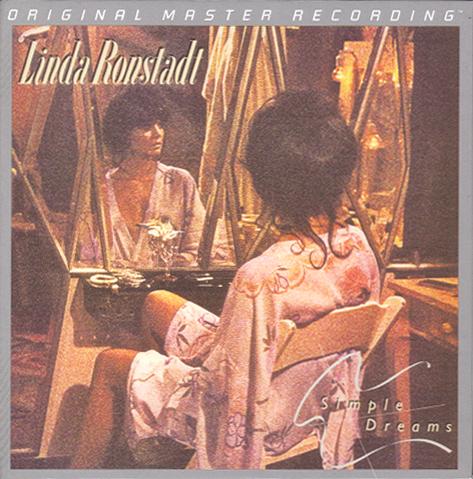 I guess I must have been dreaming if I thought we were going to get a story about sex, drugs and rock n’ roll from my favorite all-time rock goddess. But sadly, you pretty much dismiss your rock n’ roll years in this sweet little memoir that is strictly about your musical evolution from barefoot Tucson mariachi granddaughter, to country, to rock, to standards, to opera, and back to mariachi again.
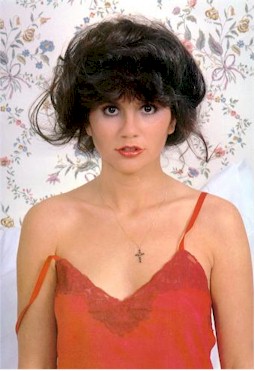 And the rock records – the stuff you’re most known for – gets the short shrift. You practically disown your period in rock because you claim you were naïve about the technicality of your instrument – your voice, and that your singing was terribly flawed through all those classic songs we grew up with; “You’re No Good,” “When Will I Be Loved,” “Poor Poor Pitiful Me,” etc.
 “What’s New,” but then promptly handed them over to my mother. I’m sure you hit every note correctly, but there was a sterile coldness about them precisely because it came off more like some technical stretching exercise rather than genuinely from the gut. Those are the songs of a different generation, who earned the right to own them through different experiences. Even my mother preferred the original singer versions.
 I even bought “Canciones de me Padre,” your first mariachi collection. And Si, you can yelp with the best of them. But again, even though you have Spanish heritage roots, it’s obvious this was not your natural first language and you were also attempting a physical stunt by trying to recreate these classic mariachi songs. But, again the stories they told didn’t come from your gut. Those songs weren’t written by someone with experiences such as yours.
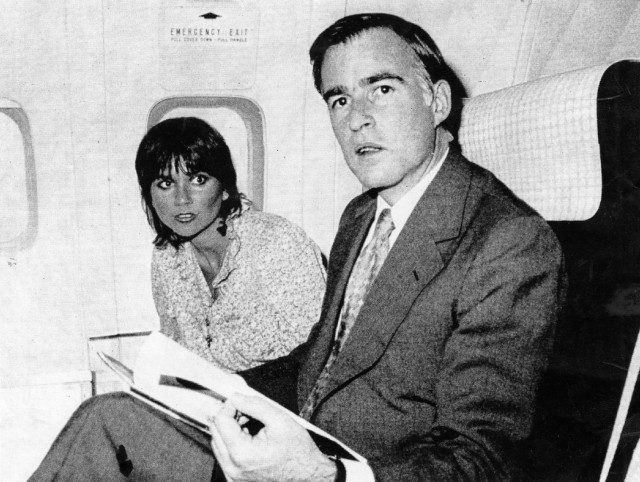 I remember walking by and seeing you having dinner with Jerry Brown at Barney’s Beanery in West Hollywood one night back in the 80s. What I would’ve given to eavesdrop on that conversation, or to even ask you for an autograph at the time, but I was far too respectful of your privacy.
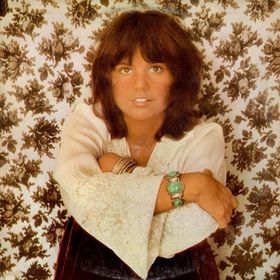 People read books to find a point of intersection to relate to either enrich or inform their own lives or interests, but who of us can relate to having so singularly powerful or beautiful an instrument as your voice? We KNOW that part. What can you tell us that you learned personally from your loves, triumphs and losses? I realize this isn’t People magazine, but it doesn’t have to be gossip. Just human.
 Personally, I think you should write a book about coping with this disease and, hopefully, how you find more strength and other passions to move forward. Baby boomers everywhere are going through similar types of experience, having life challenges and chronic conditions that force us to adapt how we live, love and move on. Your journey can inspire you forward and also help the rest of us. Whether you own it or not, the mantle of being an icon to so many of us fans requires some stewardship.
 Ironically, or perhaps cynically because of the disclosure of your condition, you have finally been nominated for the Rock and Roll Hall of Fame this very year. I’ve ranted that you should have been in there ages ago. But after reading you so disclaim your own rock heritage in this book, I now understand the Hall might be reluctant. No matter. I think you get in, and I look forward to seeing you accept the award at the ceremony, and also to some of the other powerful women vocalists of our time (Trisha Yearwood?) try to recreate some of your hits. They might do well, but, just as when you tackled the standards with Nelson Riddle, it won’t be the same.
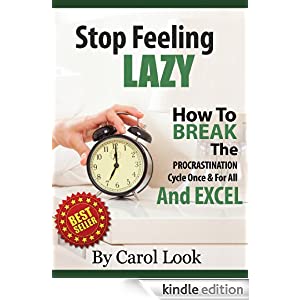 I don’t really consider myself a procrastinator, at least not for work. Early on during my school years I learned that the sooner you got your work done, the sooner you can play, while all the other kids were waiting until the last minute stressing over their projects. I carried that attitude, for the most part, into my adult working life. But, as the basic dynamics of parenthood would have it, my 16 year-old son is one of those who puts homework assignments and projects and trumpet practice off until the last possible moment before getting around to it. It drives me nuts. But that’s the point, since being a teenager is all about establishing your own identity and driving your parents nuts. And, the process doesn’t seem to stress him out at all. He knows he’ll get to it, and that’s all he needs. You can’t force your will upon a teenager without it biting you back, so if he doesn’t see it as a problem, I will learn to accept that it’s not a problem.
 The surprise to me was finding out the technique advocated in the book was Meridian Tapping. I had experienced this form of therapy before during grief counseling after my mother died, but here it was tapping me in the face again in a book on procrastination. Meridian Tapping, for the uninitiated, works on the flow of vital energy, or as the Chinese term it, ‘chi,’ through your body and how to keep it from getting blocked or stagnating. Anyone who practices or believes in yoga, meditation, acupuncture or acupressure should be familiar with the concept. Tapping is a gentle form of acupressure for various meridian points on your face, torso, or head that seek to open up or keep open the flow of that energy while you are also ‘meditating’ or focusing on a desired goal or thought. You are stating the problem and also the emotional state you wish to be in to overcome that problem while you do the tapping. I’ve seen the value of this with the practice of “I Ching,” where you toss coins while focusing on an issue in your life that you want resolution for, and then read a proverb relating to that alignment of coins.
 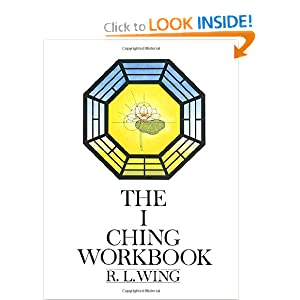 These techniques are really just forms of forcing you to intensely focus on what you want to resolve, and to apply your own consciousness through these conflict-resolving meditative techniques to bring you a solution. It’s not as far out mystical eastern hooey phooey as you might imagine. And the surest way to test whether something’s whack or not is to at least give it a try.
 Then there were the infamous “Twilight Zone” episodes. Think of the most memorable ones and chances are some were episodes he wrote, including: “Nightmare at 20,000 Feet,” where William Shatner can’t convince the crew of the passenger plane he’s flying on that a monster gremlin has been peeling back the wing fuselage. Or “Third from the Sun,” where two families desperate to escape a big brother government flee in a rocket targeted for a planet called… Earth. Or
  “The Invaders” episode, where a mute farm woman fends off the relentless attack of tiny spacemen with ray guns until she beats them and their spaceship to pulp with an ax and we hear their final distress signal calling… Earth. These perspective-shift stories might seem predictable today, but they weren’t back in the fifties and sixties when writers such as Matheson, Rod Serling and Charles Beaumont invented them.
 Spielberg even directed a TV movie based on a Playboy magazine story by Matheson called “Duel” about a hapless driver stalked by a maniacal truck driver along barren stretches of desert highway. These were stories derived from our own deepest anxieties and experiences - dangerous truckers on highways, fear of small town speed traps - but played for maximum suspense and unexpected pay offs.
 The truest version is 1964’s “The Last Man on Earth” with Vincent Price. It maintains the ultimate creepy quality of the book, where the plague vampires flail with planks beating against your boarded up house all night trying to get in while you hole up listening to classical music on vinyl. That version preserves Matheson’s own devout appreciation and love of a composer’s music (he was a huge fan of Richard Wagner) as something still worth living for in an apocalyptic world.
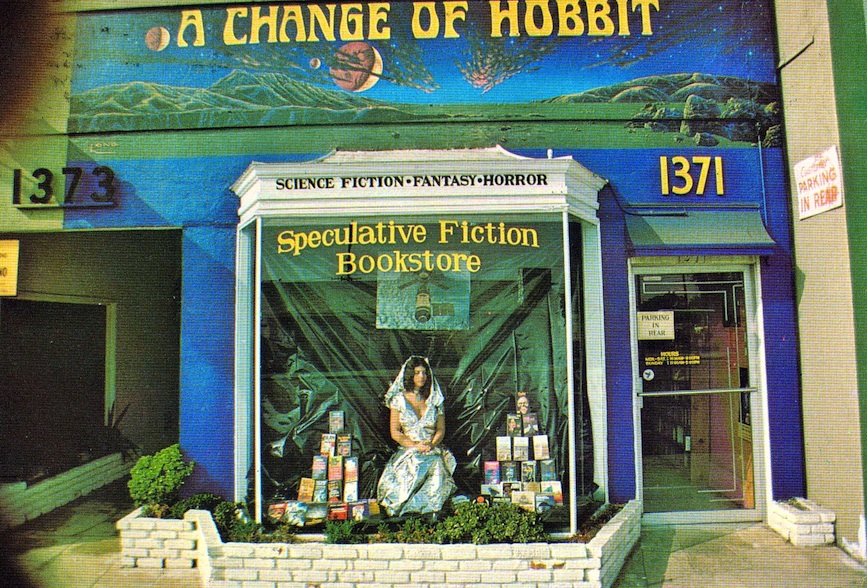
 I went to Alfred Hitchcock’s funeral (I first read some of Matheson’s stories in collections published under Hitchcock’s name). I arrived in L.A. too late to meet Rod Serling or attend one of his writing classes before he died. But I haunted the bookstores and studios that housed original copies of Matheson’s books, or that filmed versions such as, “Somewhere in Time,” “What Dreams May Come,” “A Stir of Echoes,” “Hell House,” or “The Incredible Shrinking Man.”