“What the hell!?”
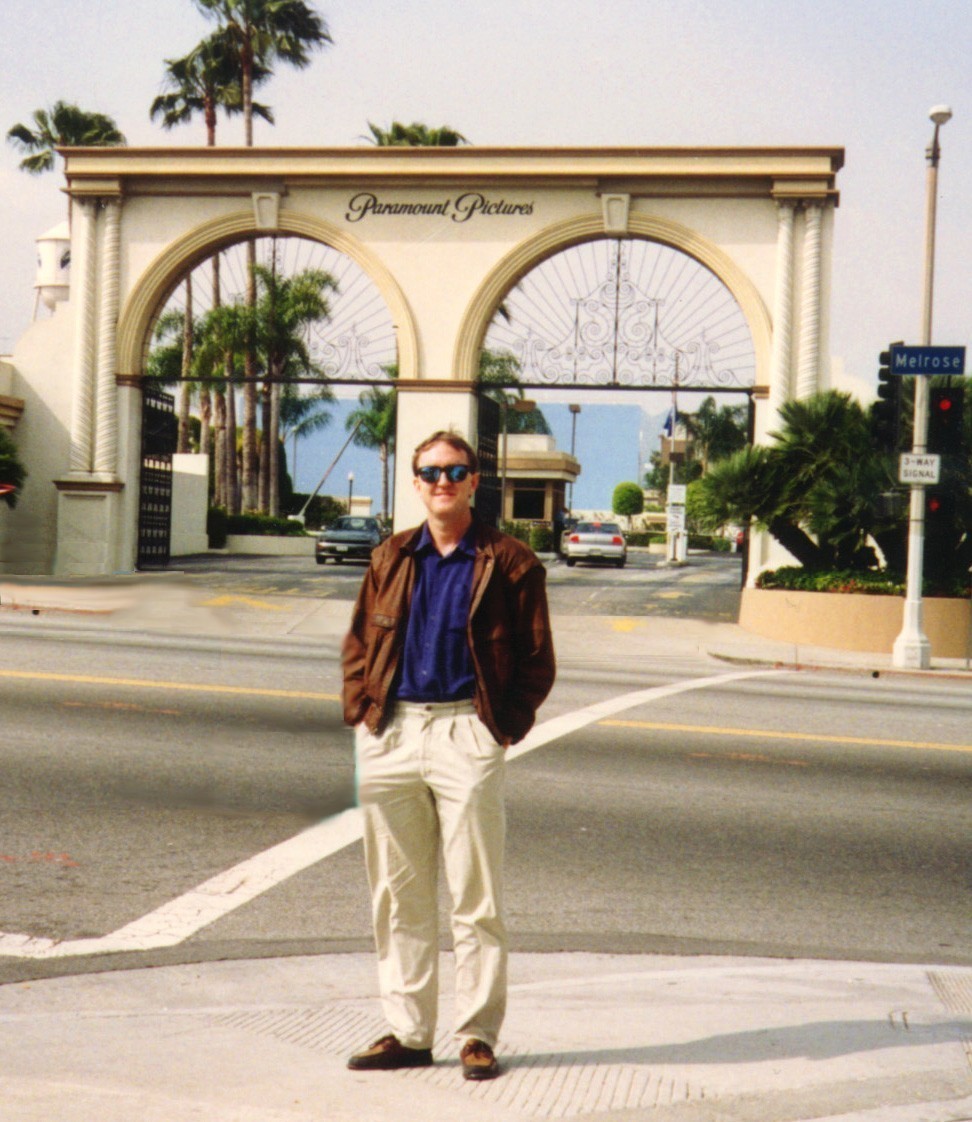
A ‘literate’ Paramount Pictures executive I was developing a screenplay for once told me that if she ever encountered a character in a script using that phrase, she would immediately stop reading and toss that submission. She explained that it was lazy, cliché, imaginatively bankrupt, and that it reflected those same qualities on any writer who would stoop to provide characters such trite, overused dialogue.
Characters in “Under the Dome,” the summer series on CBS use that phrase 11 times in the first two episodes. They use in it reaction to the dome that has suddenly entrapped their city of Chester Mills; and they also use it any time they are excitedly demanding an answer from someone else. And EVERY character uses it as if they all took the same brimstone Rosetta language course.
If that were the show’s only crime, it would merely be irritating, but the rest of the dialogue, plotting, staging and even the production choices are so dumb they are painfully laughable.
A stranger in town to collect a debt struggles with the man who owes the money and pulls a gun, and ends up killing him, and then secretly buries him. You’d think he’d want to avoid attention, but he befriends the dead man’s girlfriend who is a reporter, and stays at her house, gets in another fight with the (snarling villain) used car salesman’s creepy son, is spotted by a police squad car wandering near the woods and then, when they are suddenly called away to a house fire, turns up at the same house fire on foot helping put out the blaze. Way to keep a low profile, manslaughter man.
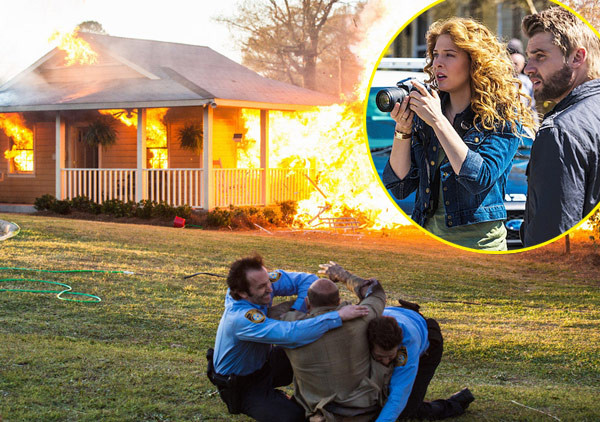 The house on fire is one of those cheesy temporary constructions Hollywood is so notorious for, with obvious gas jets spewing flames conveniently out all windows. But that doesn’t mean the preacher who has been trapped in there has already been asphyxiated and can’t be easily rescued by the woman town deputy. Oh, and the preacher is in some secret scheme with the used car salesman involving propane tanks, which is why he was in the police chief’s house trying to steal evidence after the police chief’s pacemaker exploded and killed him when he touched the dome wall.
What the hell?!
Stephen King’s novels have been adapted into some pretty classy screen fiction; including “The Shawshank Redemption,” “Stand By Me,” “Carrie,” and “The Dead Zone.” But there have been plenty of misses, as well. Count this corny adaptation as a complete whiff.
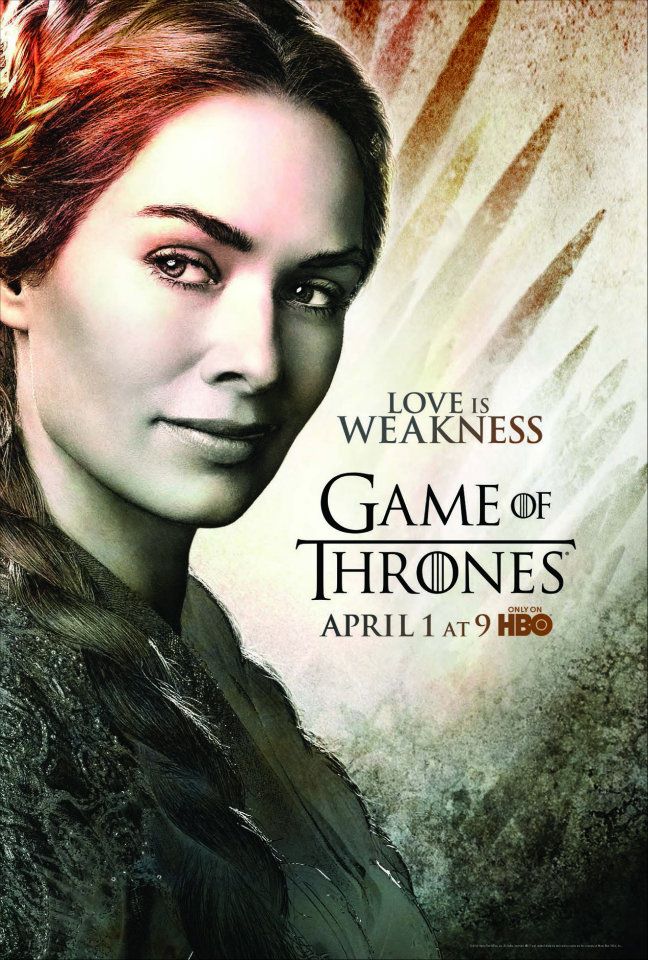
I get it; we’re not watching HBO. But if the scriptwriters adapting George Martin’s Game of Thrones can deliver viewers the rich experience of more than 30 characters with complex arcs, different speech patterns, complicated agendas, relationships and motivations, why can’t CBS do the same for the mere five or six characters who seem to be the only people that turn up at every incident in this small town? It’s lazy, unrealistic, unimaginative and just plain silly.
I’d call it a Maberry comedy, but even Barney Fife, who only ever had one bullet, never was desperate enough to resort to “What the hell?!”
- A. Wayne Carter
P. S. Here’s some alternatives for the “What the hell!” challenged.
“Jesus!” (Lapsed religious version)
“Heh-suus!” (Still religious Spanish version)
“Holy Shit!” (R-rated version)
“Crikey!” (Australian version)
“Golll-eeeee” (Gomer version)
“Verrryyy Interesting” (Arte Johnson version)
“Whoah” (Keanu Reeves version)
“Bloody Hell!” (British version)
“Fuucckkkk me!” (NC-17 version)
“Gazooks!” (Scooby Do version)
“Fascinating” (Spock version)

 Then there were the infamous “Twilight Zone” episodes. Think of the most memorable ones and chances are some were episodes he wrote, including: “Nightmare at 20,000 Feet,” where William Shatner can’t convince the crew of the passenger plane he’s flying on that a monster gremlin has been peeling back the wing fuselage. Or “Third from the Sun,” where two families desperate to escape a big brother government flee in a rocket targeted for a planet called… Earth. Or
  “The Invaders” episode, where a mute farm woman fends off the relentless attack of tiny spacemen with ray guns until she beats them and their spaceship to pulp with an ax and we hear their final distress signal calling… Earth. These perspective-shift stories might seem predictable today, but they weren’t back in the fifties and sixties when writers such as Matheson, Rod Serling and Charles Beaumont invented them.
 Spielberg even directed a TV movie based on a Playboy magazine story by Matheson called “Duel” about a hapless driver stalked by a maniacal truck driver along barren stretches of desert highway. These were stories derived from our own deepest anxieties and experiences - dangerous truckers on highways, fear of small town speed traps - but played for maximum suspense and unexpected pay offs.
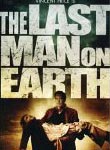
 The truest version is 1964’s “The Last Man on Earth” with Vincent Price. It maintains the ultimate creepy quality of the book, where the plague vampires flail with planks beating against your boarded up house all night trying to get in while you hole up listening to classical music on vinyl. That version preserves Matheson’s own devout appreciation and love of a composer’s music (he was a huge fan of Richard Wagner) as something still worth living for in an apocalyptic world.
 I went to Alfred Hitchcock’s funeral (I first read some of Matheson’s stories in collections published under Hitchcock’s name). I arrived in L.A. too late to meet Rod Serling or attend one of his writing classes before he died. But I haunted the bookstores and studios that housed original copies of Matheson’s books, or that filmed versions such as, “Somewhere in Time,” “What Dreams May Come,” “A Stir of Echoes,” “Hell House,” or “The Incredible Shrinking Man.”
 Don’t get attached to any characters on Game of Thrones because, as George R. R. Martin constantly reminds us; noble acts are futile, justice is blind, and everyone dies randomly without purpose or redemption (but we’ll cut him more slack than his characters get until we get to the final body count by Book Six).
 Rumor has it he wants to do a spin-off on the slimy, moral-free, self-serving lawyer, Saul Goodman. Here’s an idea for a twist: How about going the opposite direction with that show and taking this unredeemable ambulance chaser and transforming him into a respectable Thurgood Marshall on the Supreme Court by the end of his character arc? Couldn’t we believe that twist is possible?
 I’m not suggesting our culture need return to the carefree optimism of Ozzie and Harriet Nelson, Happy Days, or even the truth, justice and American way of Superman. Shit, even George Reeves, the original TV Superman, blew his own brains out for some dark-shrouded reason. But, Jesus, can’t we have a little bit of sunlight as a cultural trend for a while; heroes who aren’t mentally tortured more by their own self-doubts than by this week’s villain? (Don’t even get me started on the new brooding, bloated take on Superman in Man of Steel.)
 The people who create our movies, television shows, and literature enjoy the rarified privilege of making big money doing something fun that they love. So why are they so fucking pessimistic? Shouldn’t their output somehow reflect their good fortune rather than projecting some deep, often misperceived, collective funk?