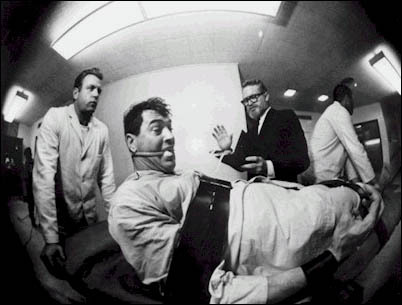
John Frankenheimer’s cult masterpiece “Seconds” just came out on Criterion Blu-ray and it’s even more disturbing than when it was released almost 50 years ago in 1966. Especially if you’re close to the age of the picture itself.
I remember seeing this picture on television probably around the time I was in college because the first screenplay I ever wrote for a film course was heavily influenced by it.
 But first, the plot. A bored, middle-aged Wall Street banker, Arthur Hamilton (John Randolph), is slipped a business address on a piece of paper before boarding a commuter train at Penn Station for his Scarsdale home. His job is numbingly dull, his marriage is devoid of any passion, his daughter is gone off on her own life, and his life is… lifeless. A call from someone claiming to be a close friend from the past eggs him on to go to the address, but how does this complete stranger’s voice know so much about him?
Curiosity piqued, he goes to the address; a cleaners, where he’s shuffled into the back of a truck and taken to a meat-packing plant, and then to a secret business location. It’s revealed this company offers life do-overs or “seconds” to high-paying customers. They substitute a corpse for your ‘untimely death’ in a fire or car crash, perform complete reconstructive plastic surgery and physical conditioning, and then set you up in a completely new life direction that you may have always regretted not pursuing.
 And, just to make sure you keep your mouth shut about a business that requires secrecy (and as a surefire deal closer) they drug you and shoot staged blackmail footage of you in a compromising or criminal situation.
A gruesome operation, grueling physical therapy, dyed hair, and months later you come out looking like Rock Hudson, are a successful but unknown painter, and live in a house on the beach in Malibu among the hedonistic and hard-partying California set. What’s not to like? You’ve had your ‘seconds.’
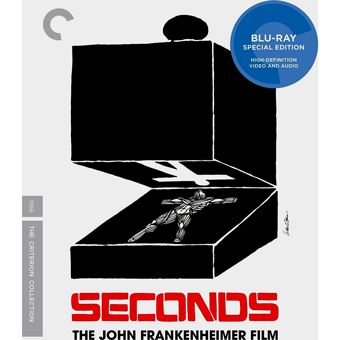 But, of course, no one changed your brain or your mind or the way you think, and you are haunted by your former life, and these new ‘friends’ seem just as phony as you are, and when you get overly drunk at a party and start blabbing information about your former life, those new ‘friends’ are not so friendly because your loose tongue is jeopardizing all of their ‘second’ chances.
And when you go AWOL back to your old town and try to see the woman you were married to for 20 years who has no way of recognizing you, but painfully reveals the depressing truths of a passionless relationship to a veritable stranger, it’s like being a witness to your own worst funeral. What happens next when Arthur decides he wants a ‘third’ chance completes the ultimate horror.
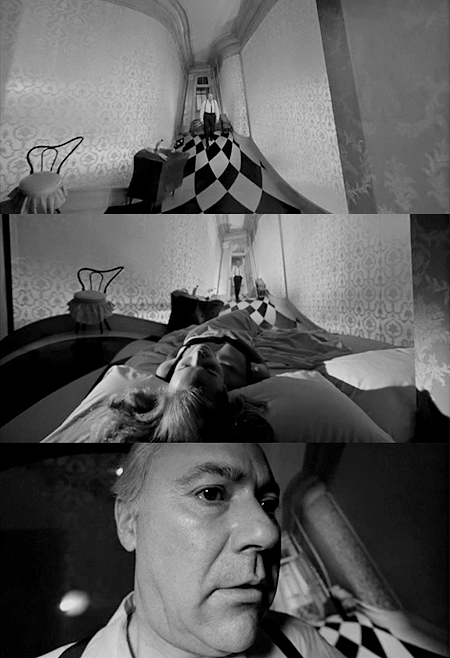 It’s a shockingly powerful and apocryphal tale that completely subverts what so many people bored with their lives think would happen if they had a second chance. The black & white photography, framing and camerawork by Oscar winner James Wong Howe are bizarrely unnerving, and the ending is as disturbing as anything you will ever see in film.
I don’t know why this film resonated so powerfully and horrifyingly to me as a kid. I think it must have been shocking for a suburban kid to see the main character who had everything we were taught in America to cherish; plenty of money, a nice family, and a beautiful home in the suburbs… be so desperately empty. And even when he gets a second chance with a new face and as a painter, he’s still stuck suddenly longing for his old life. 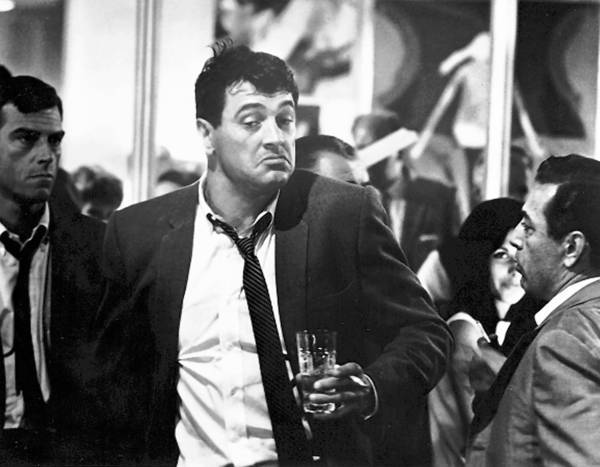 Maybe it’s the ultimate ‘grass is always greener’ story, that is revealed as an inevitable nightmare.
The first screenplay I ever wrote (at 18) influenced by this tale was called “Pay the Devil His Do,” about a bored school teacher with disrespectful students, who makes a deal with the Devil. In a twist, the Devil is a Calvinist, who believes in predestination, so he doesn’t have to buy souls since you are either pre-destined to go to heaven or hell. But he will commission people to speed up the fate of those who are destined to go to hell. The teacher, ‘Arthur Banks,’ commits one of these deeds, and his wish is to go on live national television and give a speech that shakes the rafters and wakes everyone up and tries to stir their souls into more passionate living. 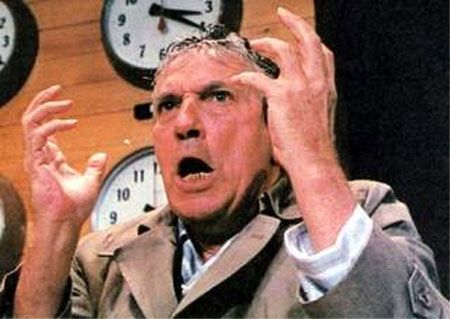 It’s the typically amateurish and overly philosophical tale every first-time screenwriter tries (and as a professor of screenwriting, I read hundreds of them). The speech was almost entirely the thrust of Howard Beale’s “Mad as hell and not going to take it anymore” rant from Paddy Chayefsky’s classic “Network,” though not nearly as beautifully written. It was written a couple years before “Network,” though, and it was inspired by the frustrating horror of “Seconds.”
(Later, in Hollywood, I was commissioned to write a screenplay called “The Donor,” where the brain of a rich old dying guy is transplanted into the body of a young stud basketball player. That one didn’t work out so well, either.)
I guess the obvious moral to these tales is to live the one life you have with all the gusto possible and without any regrets, but that’s sometimes easier said than done. I consider myself lucky I got this heads up message early enough in my own development to boldly go for the ‘artist living and partying in California’ life soon after college. But I feel even luckier that I got that life out of my system first, and ultimately found myself happier back in the quiet comfortable suburbs with a nice family, where Arthur had begun (only he had no real perspective to appreciate it). He also didn’t have the luxury of pursuing alternative lives through the craft of writing and the characters we can create in our heads and in our stories. It’s a hell of a lot safer. And you don’t have to make a deal with the Devil to do it.
- A. Wayne Carter
 Remember, there’s only 1 percent in the 1 percent, and even if you consider yourself lucky or privileged enough to fall into that category, there’s always someone within the 1 percent who’s going to be doing better than you are.
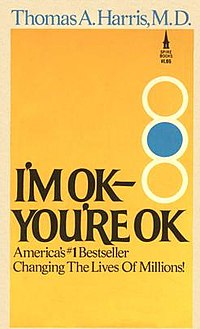 But as long as we measure anything or buy into such comparisons, we put our self-image into play. Dr. Thomas Harris once authored a national bestseller, called, “I’m OK, You’re OK,” yet Facebook fosters a paradigm shift that promotes “Look at how much better I’m doing than you, but I hope you’re still okay with that and will ‘Friend me.’”
 Eventually – and there’s evidence it’s already happening as people drop off or move on – Facebook will fade away and some other new-fangled way to ‘keep in touch’ or ‘connect’ will emerge.
 I don’t really consider myself a procrastinator, at least not for work. Early on during my school years I learned that the sooner you got your work done, the sooner you can play, while all the other kids were waiting until the last minute stressing over their projects. I carried that attitude, for the most part, into my adult working life. But, as the basic dynamics of parenthood would have it, my 16 year-old son is one of those who puts homework assignments and projects and trumpet practice off until the last possible moment before getting around to it. It drives me nuts. But that’s the point, since being a teenager is all about establishing your own identity and driving your parents nuts. And, the process doesn’t seem to stress him out at all. He knows he’ll get to it, and that’s all he needs. You can’t force your will upon a teenager without it biting you back, so if he doesn’t see it as a problem, I will learn to accept that it’s not a problem.
 The surprise to me was finding out the technique advocated in the book was Meridian Tapping. I had experienced this form of therapy before during grief counseling after my mother died, but here it was tapping me in the face again in a book on procrastination. Meridian Tapping, for the uninitiated, works on the flow of vital energy, or as the Chinese term it, ‘chi,’ through your body and how to keep it from getting blocked or stagnating. Anyone who practices or believes in yoga, meditation, acupuncture or acupressure should be familiar with the concept. Tapping is a gentle form of acupressure for various meridian points on your face, torso, or head that seek to open up or keep open the flow of that energy while you are also ‘meditating’ or focusing on a desired goal or thought. You are stating the problem and also the emotional state you wish to be in to overcome that problem while you do the tapping. I’ve seen the value of this with the practice of “I Ching,” where you toss coins while focusing on an issue in your life that you want resolution for, and then read a proverb relating to that alignment of coins.
  These techniques are really just forms of forcing you to intensely focus on what you want to resolve, and to apply your own consciousness through these conflict-resolving meditative techniques to bring you a solution. It’s not as far out mystical eastern hooey phooey as you might imagine. And the surest way to test whether something’s whack or not is to at least give it a try.