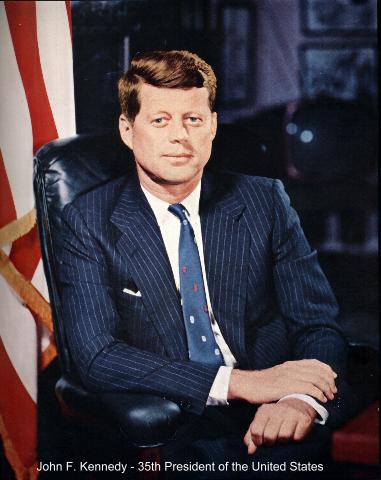
Fourth grade. Miss Booth’s class. Miss Booth wore glasses and had a big bun of white hair. She looked like George Washington, but she was also my favorite teacher in elementary school, and a very sweet person to have looking over you when the P.A. system came on and the principal announced that our President had just died after being shot. I was nine years old.
We were told to be silent and I can remember just putting my head down on the desk and trying to grasp what it meant that “Our President” had just been killed. Then they sent us home. I can’t remember if I ran or walked the mile or so home. Because of the Cold War and nearby Washington D.C. being a ground zero target for Soviet ICBMs, we often had Civil Defense drills where we were released from school and told to run home as fast as we could. This was no drill. I can only remember getting home and finding my mom red-eyed and crying on the couch in front of the television in our living room.
 We lived in Maryland about 15 miles from the White House and everyone we knew in our universe liked President Kennedy. He was young and vibrant and optimistic. The Cold War with Russia was tense, but the ‘hot’ wars were over and America was in a boom economy. He promised we’d be on the moon within the decade after the Russians had gotten the jump on us to space with Sputnik, and we believed him. We envisioned the future like the cartoon, “The Jetsons” with our families living in dwellings among the clouds and scooting around on our own private flying saucers. The press labeled the glow of optimism that surrounded Kennedy and fueled our belief in the future as “Camelot” – a magical kingdom on a hill.
It seems that few people to this day can believe that a lone gunman discontent or looking for glory could bring that kingdom down with a cheap Italian rifle and two bullets.  I couldn’t believe it. I spent years later in California going to lectures by Mark Lane and other conspiracy theorists trying to weave some fantastical story that gave such a senseless tragedy the mass complex story line it deserved. But I’ve spent the rest of my life learning to understand that, more often, the simplest explanation is usually right, and today, single lone disturbed gunman cause havoc almost every day. The problem with most mass conspiracy theories is they involve human beings, who are flawed and often susceptible to paranoia; they involve other human agents who are never as brilliant as we attribute their plots to be; and most people (who are not professional spies or soldiers) can’t resist the attention from spilling secrets if they know anything. Human behavior demystifies the myths almost every time. (For my full view on conspiracy theories see this blog).
 Here’s what I do know is true: John F. Kennedy saved the world. At the most tense moment in the Cold War for thirteen days in October of 1962, when Russian was placing nuclear warheads aimed at the United States in Cuba, Kennedy resisted bullying five-star hawk generals like Curtis Lemay demanding we immediately attack, which would have certainly ignited World War III. Instead, he challenged and stared down the Russian Leader Khrushchev both through public denunciations at the United Nations, and through secret emissaries communicating indirectly, and made a face-saving deal for Khrushchev to back down and withdraw the missiles. Strong arm diplomacy instead of knee-jerk reaction won. And for nine year-olds like us who were shown 18 millimeter films in school of how we could somehow protect ourselves from a nuclear bomb by ducking and covering under our desks, the imminent threat of a worldwide exchange of thousands of inter-continental ballistic missiles with nuclear warheads was lifted.
A year later, and long before the details of that story were ever fully revealed, our President was dead. Two days later his assassin was shot by police wannabe Jack Ruby (a George Zimmerman for his day); a familiar Dallas nightclub owner with aspirations for his own vigilante glory. 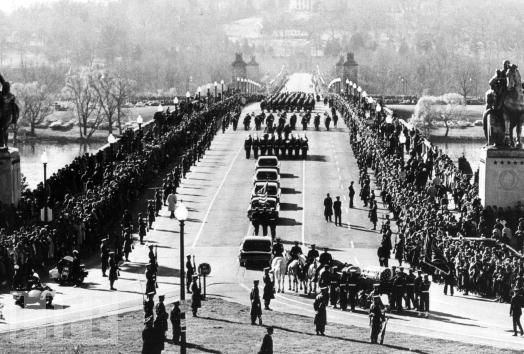 And we spent the next few days watching Kennedy’s funeral. There were only three television channels back then and they were all tuned into the funeral events nonstop. We saw the flag-covered coffin in the caisson move slowly through the cold streets of Washington. We watched six year-old John Jr. salute at his father’s grave. We watched the widow, usually fashionable with a stylish hat and sunglasses, sheathed in a dismal black with a veil.
 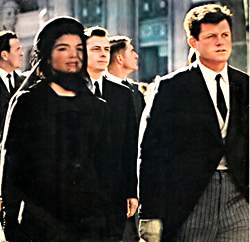 And we experienced the optimistic spirit that so pervaded his presidency being gradually lowered into the ground along with his remains.
I guess you can say we just grew up. We learned to no longer believe in the shining kingdom on a hill. JFK had Addison’s disease. He took steroids. The steroids destroyed his back. He slept around. His wife remarried a Greek tycoon. John Jr. died piloting his own plane. Personal details soon overshadowed the mythical qualities of a president who could actually represent a nation’s collective hopes and aspirations.
Where were we in ’63? Naïve, but blissfully optimistic.
- A. Wayne Carter
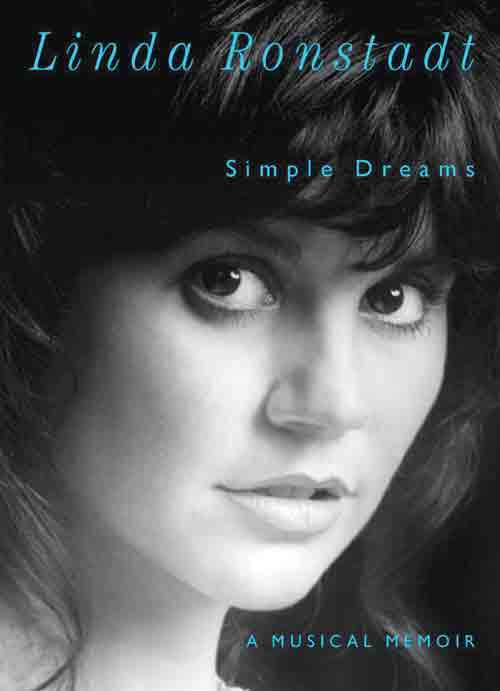
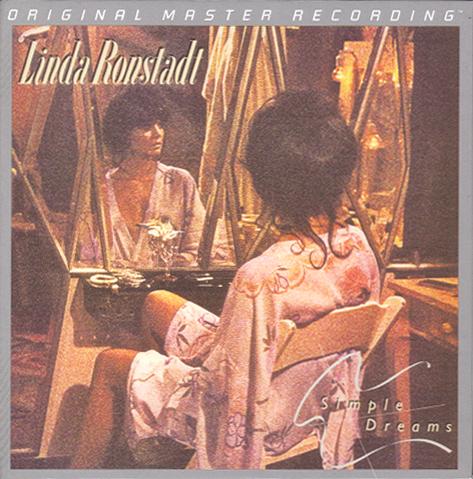 I guess I must have been dreaming if I thought we were going to get a story about sex, drugs and rock n’ roll from my favorite all-time rock goddess. But sadly, you pretty much dismiss your rock n’ roll years in this sweet little memoir that is strictly about your musical evolution from barefoot Tucson mariachi granddaughter, to country, to rock, to standards, to opera, and back to mariachi again.
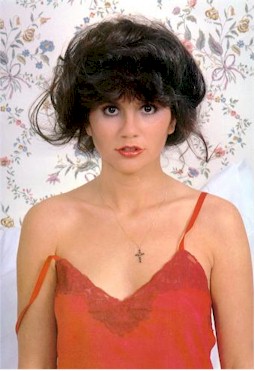 And the rock records – the stuff you’re most known for – gets the short shrift. You practically disown your period in rock because you claim you were naïve about the technicality of your instrument – your voice, and that your singing was terribly flawed through all those classic songs we grew up with; “You’re No Good,” “When Will I Be Loved,” “Poor Poor Pitiful Me,” etc.
 “What’s New,” but then promptly handed them over to my mother. I’m sure you hit every note correctly, but there was a sterile coldness about them precisely because it came off more like some technical stretching exercise rather than genuinely from the gut. Those are the songs of a different generation, who earned the right to own them through different experiences. Even my mother preferred the original singer versions.
 I even bought “Canciones de me Padre,” your first mariachi collection. And Si, you can yelp with the best of them. But again, even though you have Spanish heritage roots, it’s obvious this was not your natural first language and you were also attempting a physical stunt by trying to recreate these classic mariachi songs. But, again the stories they told didn’t come from your gut. Those songs weren’t written by someone with experiences such as yours.
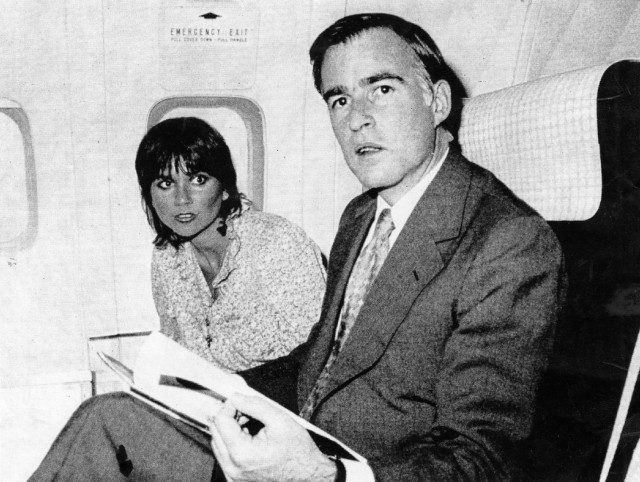 I remember walking by and seeing you having dinner with Jerry Brown at Barney’s Beanery in West Hollywood one night back in the 80s. What I would’ve given to eavesdrop on that conversation, or to even ask you for an autograph at the time, but I was far too respectful of your privacy.
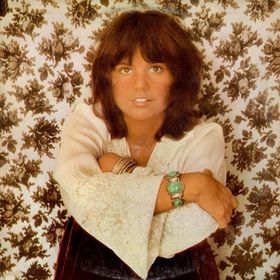 People read books to find a point of intersection to relate to either enrich or inform their own lives or interests, but who of us can relate to having so singularly powerful or beautiful an instrument as your voice? We KNOW that part. What can you tell us that you learned personally from your loves, triumphs and losses? I realize this isn’t People magazine, but it doesn’t have to be gossip. Just human.
 Personally, I think you should write a book about coping with this disease and, hopefully, how you find more strength and other passions to move forward. Baby boomers everywhere are going through similar types of experience, having life challenges and chronic conditions that force us to adapt how we live, love and move on. Your journey can inspire you forward and also help the rest of us. Whether you own it or not, the mantle of being an icon to so many of us fans requires some stewardship.
 Ironically, or perhaps cynically because of the disclosure of your condition, you have finally been nominated for the Rock and Roll Hall of Fame this very year. I’ve ranted that you should have been in there ages ago. But after reading you so disclaim your own rock heritage in this book, I now understand the Hall might be reluctant. No matter. I think you get in, and I look forward to seeing you accept the award at the ceremony, and also to some of the other powerful women vocalists of our time (Trisha Yearwood?) try to recreate some of your hits. They might do well, but, just as when you tackled the standards with Nelson Riddle, it won’t be the same.